I’d forgotten just what a truly great song Another Town is. It’s 15 years old and while I’m not usually a fan of an artist recycling previously recorded work, I’ll happily grant a dispensation in this case. I simply can’t think of a better anthem for perseverance in the face of adversity – for hope. It’s a theme that runs deep in Pete Morton’s work. All the more remarkable for the fact that Morton tackles head on some of the bleaker realities of our age, such as the plight of North African refugees in leaky boats (The Shores of Italy), global bullies (Corruption Country), or ordinary, marginal lives worthy of Alan Bennett or Mike Leigh (The Post Office Queue). The stand out for me is The Busker’s Son where he simultaneously absolves a friend and former fellow traveler (who long ago left the path for a sedentary existence) and celebrate his peripatetic life in music: “It was good to see you after all this time, your story is golden and so is mine.” Good to see you too Pete.
Saturday, November 25, 2006
Pete Morton - Flying An Unknown Flag (Harbour Town)
I’d forgotten just what a truly great song Another Town is. It’s 15 years old and while I’m not usually a fan of an artist recycling previously recorded work, I’ll happily grant a dispensation in this case. I simply can’t think of a better anthem for perseverance in the face of adversity – for hope. It’s a theme that runs deep in Pete Morton’s work. All the more remarkable for the fact that Morton tackles head on some of the bleaker realities of our age, such as the plight of North African refugees in leaky boats (The Shores of Italy), global bullies (Corruption Country), or ordinary, marginal lives worthy of Alan Bennett or Mike Leigh (The Post Office Queue). The stand out for me is The Busker’s Son where he simultaneously absolves a friend and former fellow traveler (who long ago left the path for a sedentary existence) and celebrate his peripatetic life in music: “It was good to see you after all this time, your story is golden and so is mine.” Good to see you too Pete.

Sally Nyolo and the Original Bands of Yaoundé - Studio Cameroon – Riverboat/World Music Network
 I love this CD, perhaps as much for what it represents as for what’s recorded on it. The cover art says it all. A radiant Sally Nyolo – former Zap Mama singer and accomplished solo artist – stands in front of the red steel doors of what one assumes is a warehouse studio. She holds her hands outstretched, palms up, in a gesture of welcome or gift giving. Which is precisely what she is doing with this project. A long time resident of Paris, Nyolo returned to her native Cameroon in 1998, opened a studio in Yaoundé and began inviting local artists to record in her space. Nyolo’s presence as performer is limited to three tracks, and while she is credited elsewhere as a writer, the project really does belong to the 13 other ensembles featured. The individual tracks vary from polished to rough around the edges. Consistent throughout is the warmth of both the local bikoutsi rhythm and the special atmosphere in which each these tracks were recorded.
Bela Lakatos & The Gypsy Youth Project - Introducing/World Music Network
 This is the latest release from the World Music Network’s Introducing label, with a mandate to bring ‘undiscovered music into the public arena.’ Bela Lakatos & GYP offer an antidote to the so-called ‘restaurant’ gypsy music performed for tourists and propagated until the 1980s by the state-owned Hungaroton label. This is rural Hungarian Roma music collected and passionately interpreted by group of young Romany speakers – simple songs of hardship and heartache, bitter poverty and repentant drunkards, predominantly delivered in multi-part vocals with basic percussion and guitar accompaniment. For those accustomed to their Roma all frantic sawing and hell bent for leather, it’s a real corrective. If you buy one gypsy CD this year, get the Borat soundtrack; then perform an act of easy penance by picking up Bela Lakatos & The Gypsy Youth Project.
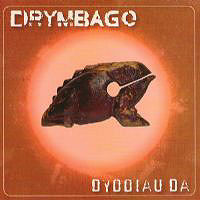
Mim Twm Llai - Staeon y Cymdogion (Sian Wales) / Drymbago - Dyddiau Da (Rasa)
 Judging by the care packages arriving from PE HQ of late, it would appear I’ve been assigned to the Welsh desk. Despite some initially trepidation, like the Italian soldiers in the film Mediterraneo, I’m starting to appreciate the charms of my neglected outpost. Mim Twm Llai is a project of a young singer songwriter Gai Toms, who serves up lively, engaging, gravely vocaled folk rock that wouldn’t be out of place in an Austin club. Drymbago is Fela-styled Afrobeat from Bangor. While lacking the personnel (they are a sextet) and the musicianship to pull it off completely, it’s an admirable effort. Individual judgements aside, it’s great to experience these young artists confidently exploring other musical traditions on the road to producing work that – by virtue of it’s use of the Welsh language – is ultimately a expression of a vital national consciousness.
One At Last - Are You Dreaming? (Sounds True)
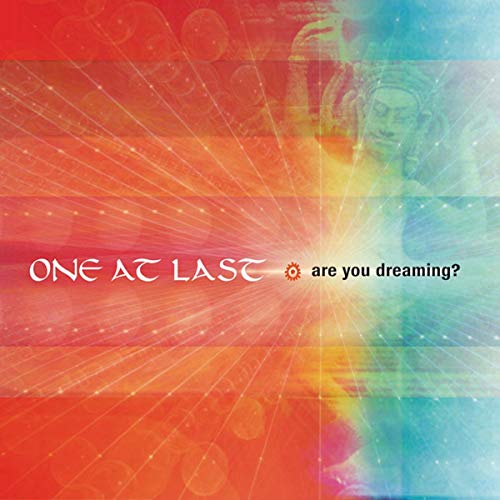 I don’t get trance music. I’m sure that Om, Jaya and Priyo are absolutely sincere when they state that this music was ‘born out of a very special dimension, when a magical window opened into the world from the cosmos,’ and they believe they access that portal when they crank up the BPMs, on a black lit stage, adorned in black and light body paint. Perhaps I’m too uptight and not suitably herbalized, but what I hear is the traditional and devotional music of various world’s cultures, recklessly and rather unimaginatively lifted and pressed into service of the most conventional beats. Far from delivering transcendence, the endless cut and paste puts me in mind of a hippie ‘Stars on 45’. Strictly for the festival twirlers.
Toumani Diabate’s Symmetric Orchestra - Boulevard d’independence (World Circuit / Nonesuch)
 From the opening brass fanfare, it’s immediately apparent that this is not a typical CD from the Malian kora great we’ve come to know and love. Celebrated for his intimate instrumental solo and small ensemble recordings, Diabate has achieved popular and critical acclaim for his collaborative projects with international luminaries such as Ketama, Taj Mahal and his 2005 Grammy award winning pairing with Ali Farke Toure. On Boulevard d’independence, Diabate assumes the mantle of ‘musical director’; a role much emphasized in the CD packaging, which replicates, with a Warholian frequency, the image of the headphoned MD in full-on conductor mode. It’s a slight indulgence that must be forgiven in light of this project’s scope (over fifty individual musicians credited) and quality. Diabate states that his goal with the Symmetric Orchestra was to ‘mix the positive and authentic side of tradition with a contemporary and modern outlook’ and to find a ‘balance between all the elements… each instrument contributing to the whole, equally.’ He achieves his goal masterfully. This is a beautiful recording clearly informed and infused by a mutual respect amongst a gathering of exceptional musicians.
Swill & The Swaggerband - Elvis Lives Here (Irregular)
 I put this one on blind while driving back from a recent Thai dinner. Minutes into the first track I started to suspect a dodgy prawn in my Tom Yum Goong, because I swear I was hallucinating a night at The Town Pump (RIP), pissed as a newt (as my father would say) on pale ale dancing to The Men They Couldn’t Hang (co-incidentally, the same un-hung men immortalized in The Tragically Hip’s ‘Bobcaygeon’ – another thinking man’s drinking band… or is that drinking man’s thinking band?). Safely home, and happily Googling, I find that, yes, indeed, the ‘Swill’ in question is Phil Odgers of TMTCH. Provoking another vertiginous episode as it appears that in the seventeen years elapsed I was totally oblivious to the fact the Phil was still at it! Still writing about drinkers and ‘tatty old boozers’ and lyrics with a social bent, like ‘World of Discontent’ and no song without a chorus you can’t sing along. Sad part is, despite swapping out Thatcher’s Falkland follies for the fallout of Blair’s Iraqi misadventure, it sure still sounds like 1989. Reassuring for some, unsettling for others.
Amparanoia - La Vida Te Da (Wrasse)
 Popularly identified with the ‘mestizo’ style exemplified by Manu Chao, Spain’s Amparanoia likewise draw from many musical traditions: Son from Cuba, Columbian rhythms and a big dose of Jamaican ska and reggae, but retain elements distinctly rooted in the Iberian peninsula. With a reputation for an energetic live performance, I was a touch surprised by how safe things were on the front 9. Turns our all the action is in the 4 bonus tracks: all the fun (‘Permites madrecita’), risk (‘Jungle 3’) and folly (a totally misguided cover of Bob Marley’s ‘Redemption Song’) appear in the last 20 minutes. After 4 spins I’m still not 100% sold on the music. Nevertheless, three shamelessly subjective facts regarding leader Amparo Sanchez compel me to recommend this CD. 1) she is from Granada; 2) she cites Lhasa de Sela and Joey Burns (Calexico) as inspiration; 3) she performed live well into the eight month of her latest pregnancy. Nothing delusional about those choices.
Suí Vesan - Merging with the brook (World Village)
 Home to Yat-Kha, Toto La Momposina and Mariem Hassan, the World Village label is no stranger to striking and – at times – demanding vocal performances. It’s a global family into which singer Suí Vesan fits perfectly. An experimenter in the tradition of fellow Slovak Iva Bittova, Vesan makes liberal use of an invented onomatopoetic language she calls ‘tatlanina’. Sparsely accompanied by guitar or light percussion, Vesan’s vocalizations are at times suggestive of Sami artist Mari Boine. The whole package she calls ‘Dadajazz’, which is a largely meaningless tag… but perhaps the point. A touch uneven – some of the less focused tracks sound a little like vocal exercises – there are beautiful moments on this recording, and always her engaging voice. The highlight for me is ‘Running through the hollow tree’, which sounds like a vocal improvisation over one of Moondog’s studies in rhythm. File – in good company – under uneasy listening.
Crasdant - Dwndwr – The Great Noise (Sain)
 It’s possible (if not entirely just) to describe Crasdant as a younger, less musically promiscuous and, most importantly, Welsh version of The Chieftains. Crasdant is Huw Williams (guitar and clogging), Robin Huw Bowen (triple harp), Stephen Rees (accordion, fiddle and whistles), and Andy McLaughlin (flute, whistles and the delightful – in name, sight and sound – traditional reed pipe the pibgorn). Four of Wales’ most accomplished traditional musicians, one might call Crasdant as a ‘super-group’, if the term wasn’t so absurdly hyperbolic for such an understated, almost humble, sounding recording. This is a charming project lovingly infused with a pride in place and culture. Thorough bilingual (Welsh/English) liner notes and an accompanying DVD featuring brief introductions to the instruments and downloadable sheet music and a slightly stiff, but still engaging video performance only add to the appeal. Dwndwr proves that – unlike Scrabble – you can score big without any vowels. 4 ½ leeks of a possible 5.
Los de Abajo - LDA v. The Lunatics (RealWorld)
 There’s a great little book published in 1987 called Cut & Mix. In it, author Dick Hebdige charts the trans-Atlantic / cross-cultural Caribbean/UK exchange that sparked the great ska revival of the late 70s and early 80s. If Hebdige were to revise his text today he’d be obliged to add at least one chapter on ska in the Latin world, and Los de Abajo would be at the centre of that story. Like the best of the 2 Tone bands, most importantly The Specials, Mexico City’s LDA are artists with deep convictions who embed lyrics with political wallop inside the most disarmingly danceable tunes. The lunatics in question are both the forces they rage against, and the collaborators who rage with them – including Temple of Sound, Dennis ‘Badbone’ Rollins (Jamaica Jazz) and, most notably, ex-Specials / Fun Boy Three member Neville Staples. El manicomio está en manos de los locos. Indeed.
Asha Bhosle - Love Supreme (Times Square)
 You’ve Stolen My Heart, Asha Bhosle’s collaboration with the Kronos Quartet, was easily one of my favourites last year. Love Supreme includes two discs: one of newly recorded ghazals, the other a compilation of favourite Bollywood duets selected from Bhosle’s lengthy career. Unfortunately this combo leaves me deeply conflicted. Imagine if Johnny Cash, having just worked with Rick Rubin on American Recordings, immediately released a double CD containing a full disc of ballads orchestrated, arranged and produced by, oh… I don’t know, let’s say… David Foster, accompanied by a fine selection of vintage tracks from the Sun sessions and early Columbia years. You see my problem? On the collection of ghazals, Asha’s voice is, as usual, enchanting, but it floats in a bowl of cheesy musical banality. Sadly, the lasting impression is that of exceedingly well-executed karaoke. Conversely, the companion disc of duets is an absolute delight providing historical insight into the artist who justifiably inspired the Kronos collaboration. Or maybe I should just get over myself, be thankful for this Indian buffet – load up on the vindaloo and pass on the paneer.
Willie and Lobo - Zambra (Narada)
 I have to confess an intense bias. I detest New Flamenco. Willie and Lobo may call their mixture of flamenco and gypsy violin ‘Gypsy Boogaloo’, but I’m not buying it. To me this profoundly inoffensive music will forever be synonymous with the uncredited musical interludes between CBC news magazine segments, or the disk of choice during ‘technical difficulties’. Please understand that I don’t for an instant question the musical capabilities of these two players; I simply don’t understand why they don’t use their powers for good. If the music playing under the voice of your local CBC commentator reading the community calendar piques your interest, this might well be to your tastes. For me it provokes calls to Audience Relations of an entirely uncomplimentary nature.
Iarla Ó Lionárd - Invisible Fields (RealWorld)
 Despite a fleeting infatuation with the first Afro-Celt Sound System record, I (like a fickle teen) greeted their subsequent CDs with a diminishing sense of anticipation. So, finding my quarterly Penguin Eggs care package contained the latest CD from Afro-Celts singer Iarla Ó Lionárd, I admit to – what proved to be – a totally gratuitous rolling of the eyes. I was so wrong. This is a superb record. To call Ó Lionárd a Gaelic singer is tantamount to saying Bjork is an Icelandic singer – true in an elemental sense, but completely failing to his capture his artistry and complexity. Sonically and emotively, this record is as suggestive of Sigur Rós and post-Japan David Sylvian (perhaps more so) as it is of Ó Lionárd’s sean nos singing contemporaries. Invisible Fields is sparse, dark, enveloping and fully realized artistically – a mature artist for the post-adolescent listener.
Värttinä - Miero (RealWorld)
 This seasoned Finnish folk ensemble is about to become that nation’s biggest musical export since… um… ever. Värttinä’s collaboration on the score for the stage version of The Lord of the Rings could initiate these mistresses of Nordic polyphony into the exclusive fellowship of ‘world music crossover’. If it happens, Tolkien’s epic tale will be making partial repayment on its substantial debt to Finnish culture. If, in turn, Miero – a Finnish word meaning Outcast – owes anything to the LOTR collaboration, it may be in the themes explored on the CD. I suspect Värttinä’s work on LOTR inspired them to return to the source – not to the sagas, but the early village tales. Stories born of tightly woven, superstitious clans, for whom all strangers were a source of suspicion and banishment was the ultimate punishment – literally a fate worse than death. The songs on Miero describe the most primal preoccupations of tribal Europe, and are populated with vengeful cuckcolds, spell casting hags and infanticides. Consider the following lyric: “May the gossipmongers have their reward: may they have serpents, may they have snakes in their cradles, may they have lizard-foetus.” Not exactly a bustle in your hedgerow or a spring clean for the May queen – perhaps one of those occasions where it’s safer to be a unilingual anglophone. The average Canadian listener who overlooks the liner notes, will remain blissfully ignorant of the lyrical content and respond instead to the – as ever – beautiful and precise vocal delivery, and sophisticated instrumental work, full of complex and engaging time signatures. That having been said, given its Finnish population, I bet this record causes a few sleepless nights in Thunder Bay. PG-13.
Darden Smith - Field of Crows (Dualtone)
 I had my introduction to Field of Crows during a transcontinental flight. Darden Smith’s quiet vocals (predictably) lost the battle with the white noise of the jet engine’s drone, and I was forced to base my first impression on the easygoing and fairly innocuous mood of the music. Back home, the more sedate setting allowed me to focus on the lyrics, and I was surprised how dark they were. Golden Age – which kicks off with “We’re living in the golden age of pain” – was immediately suggestive of Leonard Cohen’s The Future. On Fight for Love Smith convincingly channels another master of dark truths, Elvis Costello, but Mary – in which a divorced father sees his young daughter off, on her own, to her mother’s wedding – is all his own and the best song on the record.
Frank London’s Klezmer Brass Allstars - Carnival Conspiracy: In the Marketplace All is Subterfuge (Piranha)
 Now I’m no expert (being a student of Wikipedia not the Talmud), but I know the Jewish holidays well enough to be aware that during the Purim feast the (usually abstemious) Jews have license, nay an obligation, to get as pissed as the Pogues on St. Patrick’s. Listening to Carnival Conspiracy, I’m guessing every day is Purim in Frank London’s universe. Like a kid with his parents away, London raids the liquor cabinet to concoct a potent international musical mix of kosher wine, Mexican tequila, Brazilian cachaça and Czech Becherovka. Totally intoxicating and remarkably smooth for a ‘shit mix’, Carnival Conspiracy holds it together well enough to pass to a roadside sobriety test. To quote London’s liner notes “A toast: Property is Theft! Up Your Bum!”
Thandiswa - Zabalaza (Escondida)
 Graceland is twenty years past, and it’s over a decade since the ANC were elected, yet in 2006 Ladysmish Black Mambazo remains the only South African ensemble to routinely tour North American. Don’t get me wrong, I love Joseph Shabalala and the boys, but it’s time to get caught up. Thandiswa Mazwai’s Zabalaza is – if nothing else – an important corrective. Owing as much stylistically to the socially conscious R&B of Donny Hathaway, contemporary American gospel and British acid jazz, as the traditional Xhosa songs of her mother’s home village, Zabalaza is the embodiment of a sophisticated, youthful, urban, and international, post-Apartheid generation. If Ladysmith are a South African Fairfield Four, then Thandiswa may well prove to be – as has been suggested elsewhere – her nation’s Lauren Hill.
Athena - Snapshot (Embraceable)
 No one damns with faint praise like the British. When a UK critic recently compared Anglo-Greek artist Athena Andreadis’s singing on her debut EP Snapshot to Joan Baez, the association neatly identified the characteristic of the recording that had been causing me problems. To her credit, Athena is taking a significant risk, performing five sparse songs with only very understated accompaniment by acoustic guitar and double bass. Depending on your perspective, her voice is either foregrounded or exposed. To my ear, the vocal is a little forced. However, to fans of Baez, Loreena McKennitt and their ilk, Athena’s ethereal debut will be more warmly received.
Kronos Quartet and Asha Bhosle – You’ve Stolen My Heart: Songs from R.D. Burman’s (Nonesuch)
 You know those party boats that cruise our harbours, lakes and inland waterways? I have an ambivalent feeling toward them. I’ve typically dismissed them as flash and frankly a little déclassé. Nevertheless, as they move out of earshot, I’m generally left with a sense of remorse at not being among the floating partiers. I feel much the same way about the Bollywood soundtrack – simultaneously that it’s someone else’s party, yet chronically saddened at having missed the boat. Perhaps it’s the complexity and impenetrability of Bollywood itself. The world’s largest film industry generates vast numbers of soundtracks which, in turn, fuel the massive pop music machine of India and the South Asian diaspora. How big is it? Search Asha Bhosle on iTunes if you want a clue. Who knew?! Fortunately there’s the Kronos Quartet and Nonesuch Records to provide a point of entry for the occidental Bollywood-o-phobe. For the cognoscenti this CD will play as a collection of golden oldies with an interesting musical twist. For the neophyte it’s pure revelation. Either way the record is an unmitigated delight.
Yeshe – World Citizen (Dog My Cat)
 Truly a world citizen, German born Yeshe lived in over 20 countries before settling (for the time being) in Australia in the early nineties. Trained in various forms of percussion, Yeshe complements a solo career with work as a touring drummer and bassist for artists such as Ganga Girl, Panjea and long time collaborator Harry Manx (who does triple duty here as performer, co-producer and label owner). However, amongst the many instruments that make up the musical mosaic that is World Citizen, it is the Zimbabwean mbira, or thumb piano, rather than the drum that infuses the spirit of the CD. This is a profoundly gentle – in the best sense of the word – evocative of Geoffrey Oryema’s Exile.
Kofi Ayivor – Rhythmology (Otrabanda)
 Part of Otrabanda’s audiobiography series, this recording focuses on the 40-year plus professional career of Ghanaian percussionist Kofi Ayivor, whose CV includes stints with E.T. Mensah, KofiCo and most notably Osibisa. Less a retrospective than a collection rare and unreleased tracks, Rhythmology touches down at various points in his career to provide a glimpse of the breadth of Ayivor’s own compositional and stylistic explorations. The CD jumps from traditional Ewe drumming to Fela-esque Afrofunk and two very satisfying “disco boogie” tracks (c. 1979), and transitions into some late nineties cross-cultural musical explorations that include the CD’s most impressive track, ‘Conversation for Two Elephants’, a duo with Indian tabla master Shankar Lal.
Plena Libre – Evolución (Times Square)
 The eleventh album in the eleven-year history of Puerto Rico’s foremost practitioners of the Afro-Rican folkloric tradition plena builds on the artistic momentum that has garnered Plena Libre three career Grammy nominations. The evolutionary adaptations to which the title refers include additional brass and other instrumentation, and supplementing the 13-member ensemble with guest musicians – all in service of Musical Director Gary Nunez’s increasingly complex arrangements. The result is a recording of unrelenting energy that captures a very tight Latin big band at its’ best.
ATTAC - Un Autre Monde Est Possible (UWe)
 Created by ATTAC (Association pour la Taxation des Transactions pourl'Aide aux Citoyens) this compilation is part of the activistorganization's internationalist response to the forces ofglobalisation and rampant consumerism. Handsomely packaged (eitherironic or a refreshing exception for this type of project, dependingon your perspective) the CD features politically engaged artists suchas Manu Chao, Asian Dub Foundation Femi Kuti and Moby plus asixty-four page multi-lingual booklet containing texts from some ofthe biggest names in the anti-globalization movement: Naomi Klein,Noam Chomsky, Marcos and Arundhati Roy. My only complaint - and it isperennial issue with compliations - is that both the texts and tunesare recycled from readily available sources. However, the CD is worththe purchase price for the inspiringly shambolic cover of The Clash'sLost in the Supermarket by Bosnian artist Emir Kusturica & The NoSmoking Orchestra. With the Xmas shopping binge upon us, it's anexcellent way to accessorize your dissent!
Fruit - Burn (MGM/FruitMusic)
 Australian folk trio Fruit are, by all accounts, extraordinarilyengaging performers. These three women have cultivated a significantCanadian audience through festival appearances and are routinely bigwinners in the record tent sales sweepstakes. I've not seen them liveand Burn was my first taste of Fruit. Unfortunately it was aprofoundly disappointing experience. Granted, Fruit has lots ofheart, but it is largely of the capital H variety - exceedingly Annand Nancy Wilson in the 'Crazy on You' vocal delivery and anthemicstyle. I don't know if Burn is typical of Fruit's recorded work butthis CD is seriously overproduced; burdened with orchestration thatdetracts from already overwrought lyrics. While I freely admit Ilikely fall outside the typical demographic of Fruit fandom, I don'tdoubt the sincerity of their work for one instant - it's there inspades. The CD does contain glimpses of something simpler - the songPeace for example - that compels me to see them live as a trio,without the strings, before making a definitive decision about theinclusion of Fruit in my diet.
Sierra Maestra - Son: Soul of A Nation (World Music Network)
 Not to speak ill of the dead, but can mainstream interest in Cuban son, triggered by the Ry Cooder mid-wifed revival project Buena Vista Social Club, survive the cumulative effect of the deaths of BVSC core ensemble members, most recently Ibrahim Ferrer? If measured only by their pervasiveness and persistence on coffee shop play lists, BVSC must be one of the most successful musical brands of the last decade. However, having made BVSC synonymous with Cuban son, and with that brand in decline, what is the prognosis for audience fidelity to son as a genre? It’s a question that troubles me as I listen to this lovely collection of classic son performed by Sierra Maestra. The execution is impeccable and the spirit is undeniable. Admirable homage to the great son artists of the 1920s to 1960, from an ensemble that has faithfully carried the torch for this tradition since the 1970s and will – no doubt – continue to do so until the musical wheel turns full circle.
Waldemar Bastos - Renascence (Times Square/World Connections)
 In 1998 I traveled to Seattle for the inaugural and short-lived WOMAD USA. Out of a festival lineup of favourite WOMAD UK alumni and other ringers (including The Tragically Hip – engaged to induce a temporary southerly Hoser migration), the Angola born, Lisbon-based, singer-songwriter Waldemar Bastos was the one genuine revelation. Performing solo and acoustic, his delivery was simultaneously heartbreaking and seductive – potent expression of an artist in exile. A lot has happened in the intervening seven years. Most notably for the people of Angola, three decades of civil war has been brought to a close. Bastos has responded with an optimistic recording, rich with international musical influences including the traditions of Brazil, Jamaica, Portugal and Congo. Renascence is a celebratory and musically inclusive recording, signaling a shift in Bastos’s identity – from homeward looking exile to an artist at home in the world.
Alvin Youngblood Hart - Motivational Speaker (Artemis/Tone-Cool)
 ‘Ah, little lad, you're staring at my fingers. Would you like me to tell you the little story of right-hand/left-hand? The story of good and evil?’ With L-O-V-E and H-A-T-E tattooed across his knuckles, Robert Mitchum’s homicidal preacher sermonizes in the classic Night of the Hunter. There’s some ‘right-hand/left-hand’ at work on Motivational Speaker. In 1996 Hart introduced himself to the listening public with a gentle knock – with ‘Big Mama’s Door’, the title track from his bare bones acoustic blues debut. Five albums later, he kicks that same door of its hinges with a blistering electrified reprise… which doesn’t let up until the fifth track, when he takes an abrupt and expertly executed right turn into the gonzo country terrain of Doug Sahm! This album’s a full-on rocker, more likely to invite comparisons to Lenny Kravitz than Guy Davis. The originals are great, and the four covers (Otis Redding, Free, Johnny Paycheck and Sahm) are inspired. In both sensibility and quality, a kick ass – and only slightly sinister – record.
Kasumai – Senegal Urban Rhythms
 Originally from the Casamance region of southern Senegal, Kasumai is a vehicle for the compositions of Sagar N’Gom, a London-based percussionist who performed in the nineties as a member of Outback (later Baka Beyond). Thematically, the songs engage with universals such as love and loss, as well as issues in contemporary African life, such coup d’etat, regional secessionists, economic instability and - my favourite - the bravery of the Senegalese side in the last World Cup. Stylistically the CD ranges from kora solos, to Cuban influenced songs evocative of Orchestre Baobob, and others suggestive of Baaba Maal or Salif Keita, all punctuated with traditional percussion segments. Depending on your tastes, this eclecticism might offer welcome variety, or come off a little schizophrenic. To my ear, the kora-centred tracks are the strength on a recording somewhat compromised by average vocals and compositions that sound a touch imitative.
Harald Haugaard & Anders Mogensen – Spirits
 Danish musician Harald Haugaard is best know (or will be soon) to Canadian audiences as one half of the outstanding folk duo Haugaard & Hoirup. To use a local comparison, fiddler Haugaard is the Zubot to guitarist Hoirup’s Dawson. Like his Canadian cousin, Haugaard is young (in folk years), outrageously talented and profoundly interested in the pros and cons of collaboration. Spirits is a project born of his day job, as head of the folk music program at the Carl Neilsen Academy, a pairing with jazz drummer and fellow prof Anders Mogensen. Jazz guitarist Kristen Jonsson and bassist Jonas Westargaard complete the quartet which – following a scant two days rehearsal – let fly in the studio using repertoire drawn from Danish folk repertoire, medieval ballads and 18th and 19th century fiddlers notebooks. The tunes are treated with respect but not deference, with strikingly good results. Neither for the purist, nor a Danish folk primer, Spirits is four musicians in top form, exploring and at play.
Mercan Dede – Su
 In an era when the TV media feeds us a diet of bland reductions instead of rich diversity, is it any surprise the Islamic world is monolithically portrayed as the lands that joy forgot? Meanwhile, 13th century Sufi mystic, Rumi is currently the best-selling poet in North America and the soaring vocals of Nusrat Fateh Ali Khan are familiar to anyone who has rented Bend it Like Beckham. Like Rumi and Nusrat, Mercan Dede contributes a necessary corrective to the FOX News worldview. A Turkish born Sufi adherent, trained in multimedia in Saskatoon, this sometime Montreal resident combines elements of traditional Turkish Sufi music with contemporary electronica. Clearly at ease working across cultures, Dede chooses his collaborators broadly – among them, singer Susheela Ramen, sitarist Sheema Mukherjee and Canadian electric violinist Hugh Marsh. Lush and ethereal, the contemplative compositions on Su will appeal to fans of World Fusion / Trance projects such as Afro-Celt Sound System and Trans-Global Underground.
Charanga Cakewalk – Loteria de la Cumbia Lounge
 The nombre de pluma of Austin multi-instrumentalist Michael Ramos (keyboard and accordion for John Mellencamp, Patty Griffin and the Bodeans), Charanga Cakewalk is a studio project that evokes three of my guiltiest pleasures - lotteries, lounges… and especially cumbia. Cumbia, the lazy, loping rhythm of Colombia alive at the centre of this recording, has none of the richness or complexity of other Latin rhythms. However, it gets Juan Valdez and burro home from the coffee fields with a spring in his step and that’s good enough for me. Loteria is a playful musical romp, utterly Catholic in its source material and instrumentation (is that actually a vocoder in track 5?) and unrepentantly so - especially when Ramos is in his most Esquivelesque of moods. Muy bueno.
Altaf Gnawa Group – Gnawa Music from Morocco
 Is it a peculiarity of the ‘World Music’ racks that certain labels persist in releasing CDs with the ersatz cultural anthropologist in mind? You know the ones I mean – where the GENRE or COUNTRY of origin take top billing and the ensemble’s name appears as a ‘below title credit’. Helpful liner notes that tell you enough about the tradition to make table talk, but which reveal precisely nothing about the musicians and fail to credit the music, get my y-fronts in a knot. Oh, who am I trying to kid? I freely acknowledge the cultural validity of Gnawa, it’s just that – speaking personally of course – I don’t understand why you’d want to listen to 76 minutes of it on CD. Unless you had a paper to write for your ethnomusicology class, in which case I urge you to buy and enjoy this truly representative record… and crib from the liner notes.
Tété Alhinho – Voz
 A native of Cape Verde, Tété Alhinho sings predominantly in the style know as morna – the melancholic musical tradition which achieved Gypsy King-like ubiquity via the phenomenal success of fellow islander Cesaria Evora. When one voice has come to define a genre comparisons are inevitable, but really problematic. It’s like the seminal recording of a song. Could you ever objectively hear a version of The Girl from Ipanema without Astrud Gilberto whispering in your ear? Now elevate the problem exponentially. There are some important distinctions that set the two singers apart. A generation younger than Evora, Alhinho is a composer and lyricist, rather than an interpreter, who, along with long time collaborator guitarist Mário Lúcio, contributes ten of fourteen of the pieces on Voz. Alhinho’s vocals are not (to this non-Portuguese speaker at least) as emotionally evocative as Evora. However, there is a welcome warmth and intimacy to these spare, delicate recordings for voice and guitar.
Subscribe to:
Posts (Atom)